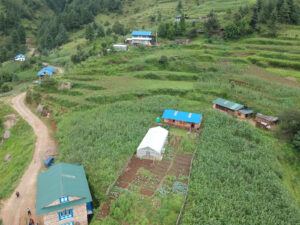
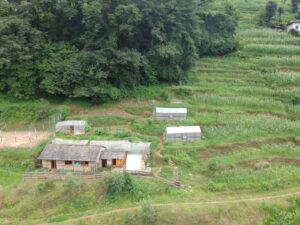
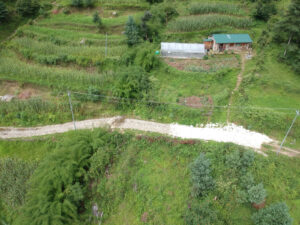
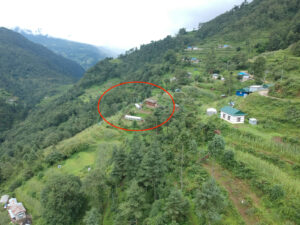
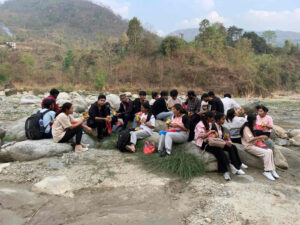
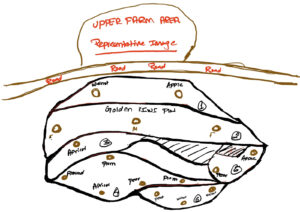
… you can also get a feel for the location of the model farms. The stone-paved road in Merangding is new. This is a great improvement for the village, as it makes it much easier to reach during the monsoon.
.. the vegetable fields of the model farm in Kunikhop are protected by a fence.. in Ghunsa, the protection of the terraces by the ‘water’ paths is particularly important.. in Merangding the road is paved with stones, under the road is the new orchard.. in Chyangsar, the model farm is only accessible on foot on the slope
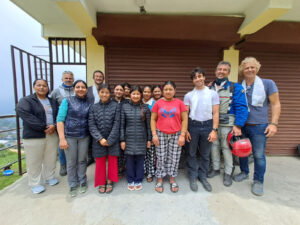
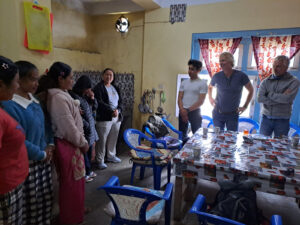
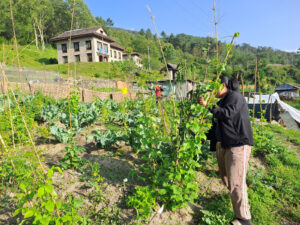
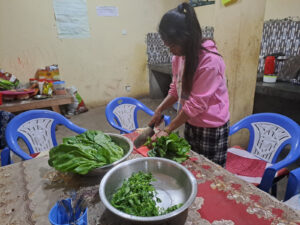
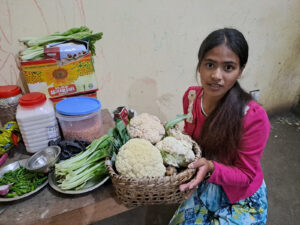
… the girls at the hostel received a surprise visit from Robin Schöck, Managing Director of the Schöck Family Foundation. This was of course very exciting, as they were allowed to proudly show off their house and garden immediately after their final exams. Of course they also harvested and cooked for the guests.
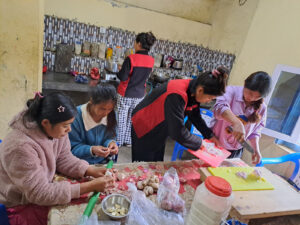
.. the girls with the guests in front of the house.. everyone is introduced in the kitchen.. fresh vegetables are harvested for the guests in the girls’ garden.. the girls have also learnt a lot about cooking.. they are proud of THEIR vegetables
.. the traditional momos are skilfully made by hand for everyone
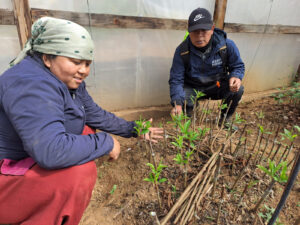
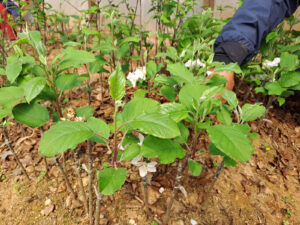
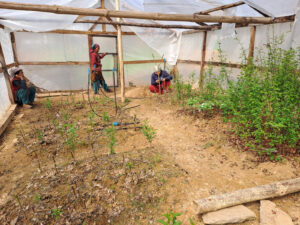
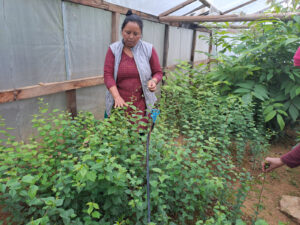
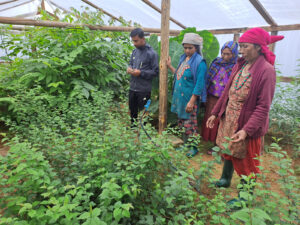
… we are all delighted with the success of the first tree nursery. As there had never been a tree nursery of this kind before, it was an experiment and also a risk. But the grafted trees are developing well and soon fruit will also be available on the family farms. This will enrich the children’s diet in particular.
In the future, these fruit trees can also be sold and thus generate income for the women of the co-operative.
We are delighted and would like to thank Schoeck Family Foundation for supporting this project.
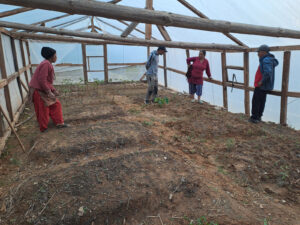
.. the larger trees and mother trees are cared for outdoors.. grafting takes place in the greenhouse, not all small trees work well.. the expert accompanies the cultivation.. even the small cuttings have their first flowers.. there is enough space for the fruit and nut trees in the greenhouse
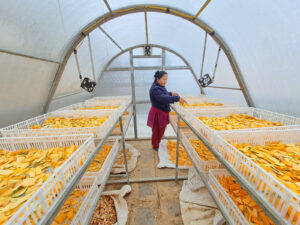
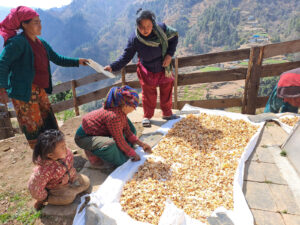
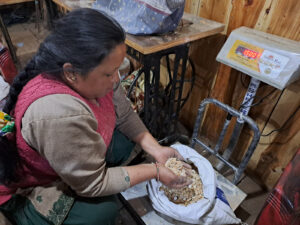
… is the idea of processing pumpkins. Until now, some of them were eaten but most were fed to the animals. They grow everywhere, even on slopes that cannot be used for other vegetables. Now they are collected from all the villages and processed in Ghunsa.
Dried and possibly as flour, they can be used for soups, curries, but also bread and cakes. The market for these long-life products is to be developed, especially in the accommodation centres on trekking routes and in Kathmandu.
Many thanks to Fair Styria, which supports the marketing of the products.
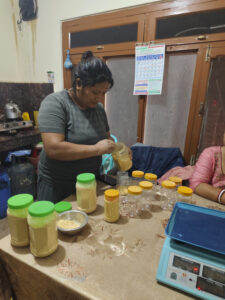
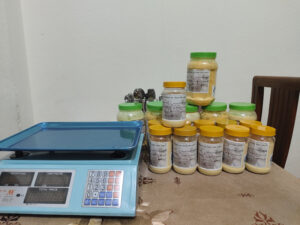
.. the cut pumpkins are dried in the solar dryer… where possible, the women also dry them outdoors.. in addition to the pumpkins, the seeds are also processed.. The flour is bottled.. the products are certified organic
.. direct sales have started at the market in Kahtmandu
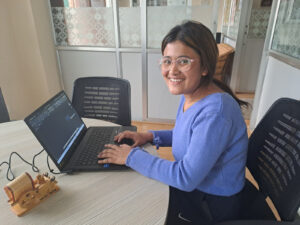
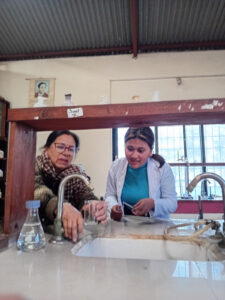
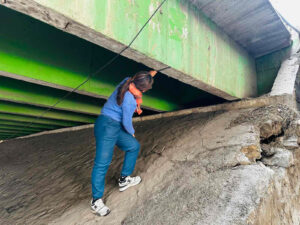
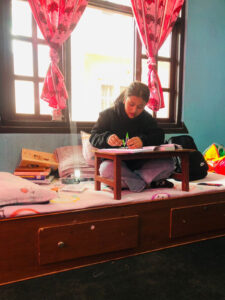
… our scholarship holder Binu from Changsar has settled in well at the technical university. She is the first girl from our 4 villages in Solukhumbu to make it this far. Her dream is to improve the infrastructure of her country as a civil engineer.
We wish her continued success and thank the Club SI Wien Vivata for their great support.
.. the new computer was necessary for the work at the university.. in addition to theory, there is practice in the lab.. bridges are examined on excursions.. the students of the whole semester go on excursions (break ?).. work is done in the room
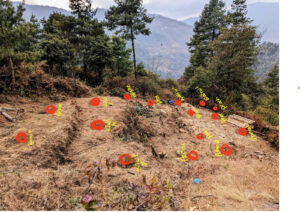
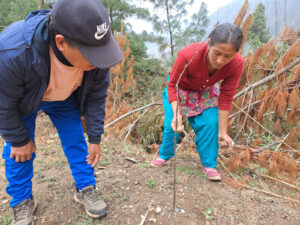
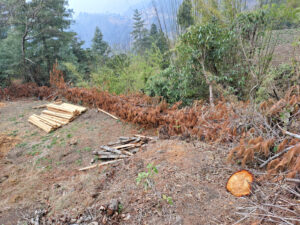
… a piece of land was added to the model farm in Merangding. Most of the grafted fruit trees come from Ghunsa, and the resulting wood can be used for fencing and other work on the model farm.
We are delighted with the village about the first mixed orchard and hope that it will flourish
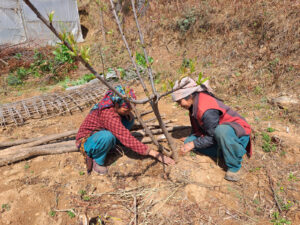
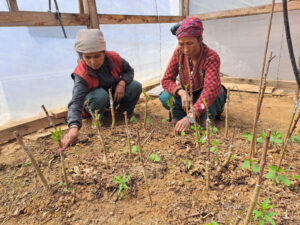
… our professionals planned the garden with the women… the trees are distributed across the plot… the women plant the new fruit trees together with the expert… the trees are still small and will need a lot of care
… the material collected will be used for the fence
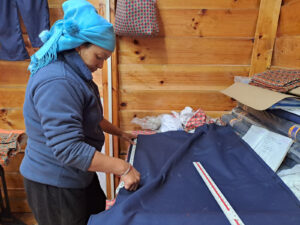
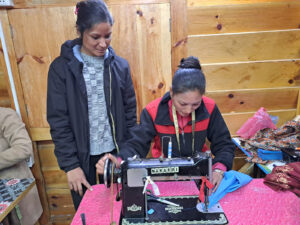
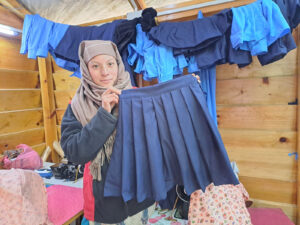
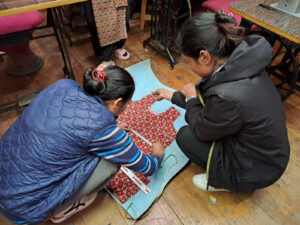
… local skills and opportunities means training the women so that they can sew the girls’ school dresses themselves in future. After the compulsory part, there is also training for other women’s clothing, which they are of course particularly pleased about.
For the first time, the school dresses for our approximately 140 girls will be sewn by the women of the cooperative.
This creates another opportunity to generate income but also to sew for the family. Each model farm has a sewing workshop that is available to the women.
We would like to congratulate and thank our sponsors for supporting the girls and their mothers.
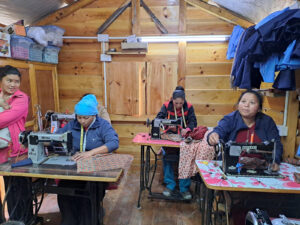
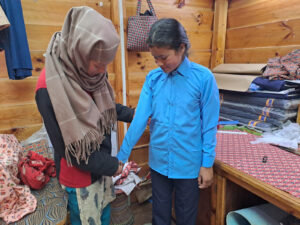
… eager sewing at the model farm in Chyangsar.. the women learn to adapt the pattern to different sizes.. a trainer assists them for a month.. the results are proudly shown.. the girls come round for a fitting
.. and after all the dresses are finished, private sewing takes place
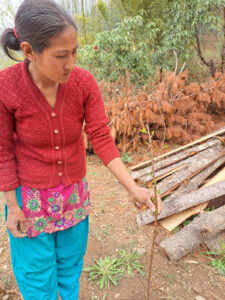
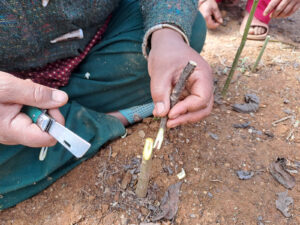
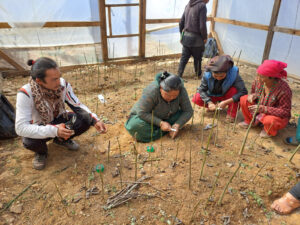
… fruit trees are now also being grafted at the Ghunsa tree nursery. Almonds, apples and walnut trees are grafted onto local rootstocks. This is completely new for the women, it doesn’t always work, but the first successes can be celebrated.
The trees for the new orchard in Mergangding have already been provided by Ghunsa.
.. must be cut carefully.. the experts pass on their knowledge to the women.. the trees are grown in a separate greenhouse.. after a while you can see the results
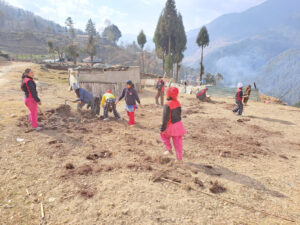
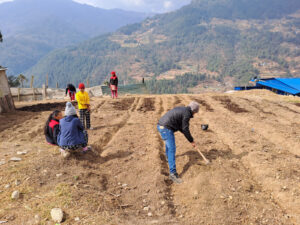
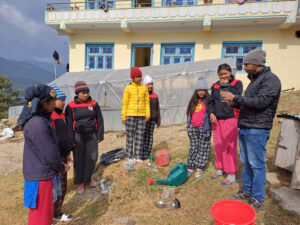
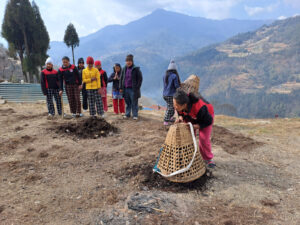
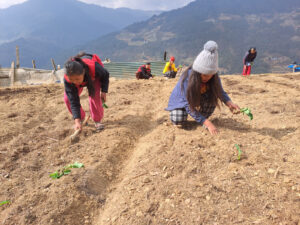
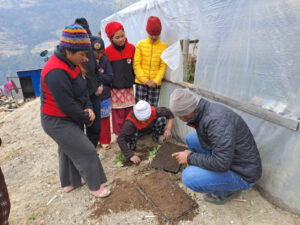
… the girls from the villages can now live and learn in the new hostel in Sallerie. It is important to us that they not only finish school, but also learn other important skills. Cohesion, organisation, vegetable growing, cooking with regional vegetables according to old recipes and much more. They have now planted fields to grow their own vegetables.
.. together we make beds for all the girls on the leased land.. Lovingly with paths and one for each girl.. our permaculture expert explains and hands over tools.. Compost from the village is piled up.. Plants from the model farms are planted.. the next ones are prepared with seeds
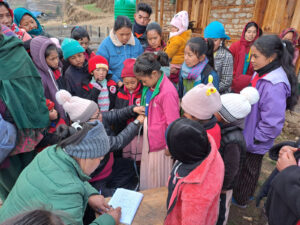
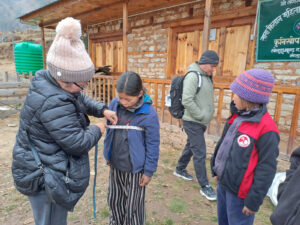
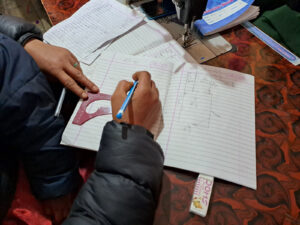
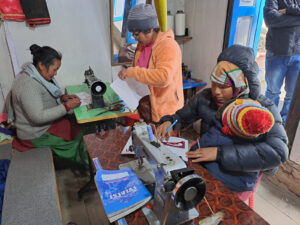
… the school dresses for all villages are sewn by the women themselves. In 2 workshops (Merangding and Kunikhop), a few women each receive training on how to measure, cut and sew. The school dresses are then produced as part of the training.
In addition to training for the future, the hard-working seamstresses also receive a wage for the finished school dresses.
This means that the added value for the school dresses of our protégés remains in the villages.
Here are the first steps in Kunikhop.
Many thanks to all sponsors who make this particularly sustainable purchase possible ?
.. the annual measurement is very exciting for everyone.. right over the garment, it doesn’t have to be skin-tight either.. then they learn how to draw the pattern