Category: Kunikhop-EN

  • At the beginning ..

    At the beginning ..

    .. of the project implementation, our local partners took another look at the situation of the individual families in the village. This makes it possible to respond even more specifically to the needs and to show changes. For example, there are already a few greenhouses in Kunikhop where the government has financed the plastic. Some of the animals are already being sold. As far as vegetables are concerned, they still grow relatively few species and, above all, not yet in a mixed culture.

    The women are very happy to learn all this in the new project.

    Many thanks especially to the Schöck-Familien-Stiftung gGmbH for making this possible for them.

  • In the villages ..

    In the villages ..

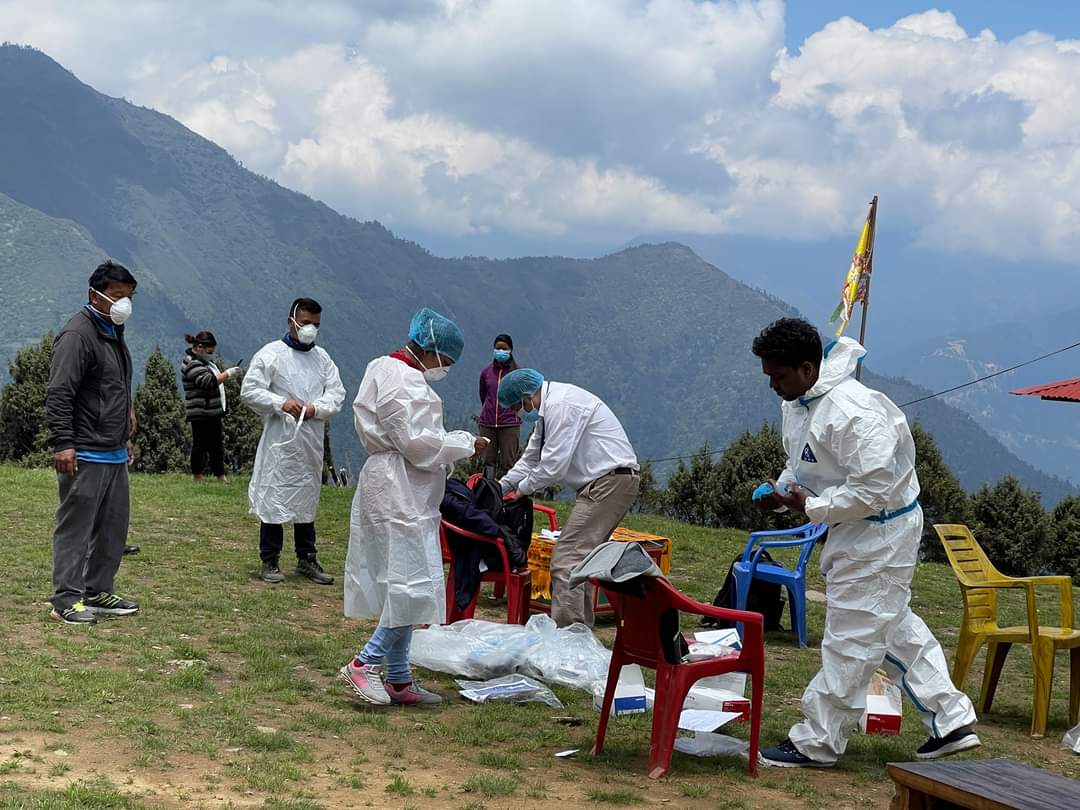
    .. 24,400 people live in Soluthudkunda, spread over 565 km2, some of which are very difficult to reach. They are cared for with 2 small hospitals and 9 health posts. It is important here that the aid – often only on foot – could be distributed directly to the population and the health posts. Together with the local government, this has now been achieved on a larger scale. Above all, hygiene and testing should keep the impact as low as possible.

    Many thanks to all who have supported us in this. Now we can only hope that the situation will stabilise again soon.

  • Quick help ..

    Quick help ..

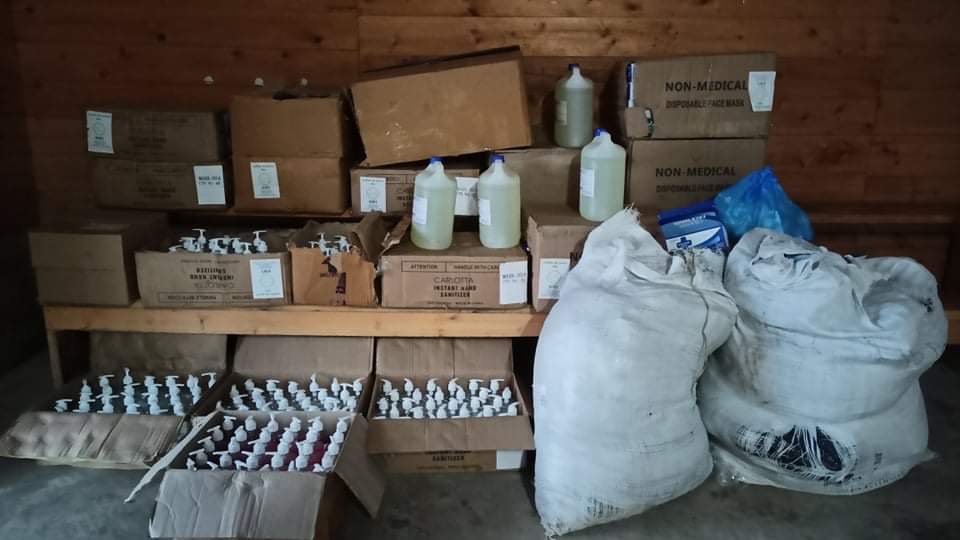
    .. was also important now. We still hope for many donations to be able to finance everything. But we had to start buying the material for the health posts in the villages. Our great local partners in Kathmandu organised everything and with the help of the local government in Solududhkunda it could already be transported despite the lockdown.

    The women of the cooperative also actively helped and sewed washable sanitary pads for staff and patients in the Covid wards at no cost.

    We hope that these activities will minimise the impact of the pandemic on the villages.

    A big THANK YOU to all who have already donated and a big PLEASE for further support at AT59 5800 0205 9986 9019.


  • Help for the villages ..

    Help for the villages ..

    … is being created in Sallery, where a care centre with beds is being built. In order to provide good care for the more than 20,000 people in the villages, which are spread over more than 500 km2 , we want to work together with the local government to supply this centre and the approximately 10 existing health posts with medically necessary material. The way to a hospital (there are only 2 small ones) or to the centre is too far for many and often only possible on foot.

    We hope for your help and donations under AT04 5800 0205 9987 3016.
    Many thanks!

  • School starts ..

    School starts ..

    .. in April/May in Nepal and our students should be well prepared for this. In Kathmandu the schools are closed again due to the lockdown, we hope they will stay open in the villages.

    In any case, we wish everyone a successful school year.

    Many thanks to all our sponsors and private donors who stand behind the scholarship holders.

  • Fewer coughs ..

    Fewer coughs ..

    .. and colds were seen in the villages this winter. The reason for this is the masks worn by the women, especially on cold days when working outdoors. The masks also do a good job of protecting the lungs against the smoke in families where cooking is still done on an open fire in the house.

    We are happy that we can contribute something to the health of the population in the villages.

    Many thanks to the province of Vorarlberg and Chay-ya Austria without whose financial support this project would not have been possible.

  • Masks for all ..

    Masks for all ..

    .. are now distributed in the villages of Chyangsar, Ghunsa, Meranding and Kunikhop. The children in the schools have also been equipped with them.

    Now we can only hope that these will help to keep infection rates low in the villages. The masks are also used to protect against dust, which is raised by the few vehicles on the bad roads, and against smoke in the houses.

    Finally, we would like to thank the province of Vorarlberg and Chay-Ya Austria, who have supported this project to a large extent.

  • Better and better ..

    Better and better ..

    .. are the washable sanitary towels. The feedback from the women is discussed and the new models are adapted accordingly. The general process of how the individual sewing workshops work together is also explained and discussed by our social worker Racedi.

    For example, there is now a central warehouse for the material, which is collected by the women from the villages, and when the sanitary napkins are delivered, they receive the agreed wage per sanitary napkin directly from the cooperative. The sale will then also take place centrally through the cooperative. In this way, marketing can be done jointly and larger quantities can be delivered.

    We are proud of the skills that the women have built up in such a short time and thank our sponsors for their support.

  • Successful ..

    Successful ..

    .. was the quick effort of all sewing forces to distribute the first masks not only to the students but to all inhabitants in the villages of Chyangsar, Ghunsa, Meranding and Kunikhop.

    The sewing is going on diligently but already some things will be distributed before Christmas.

    We thank before all Chay-ya Austria and the province of Vorarlberg for making this project possible.

  • Kunikhop – Income

    Kunikhop – Income

    For the women in Kunikhop, we supported the establishment of a sewing workshop in 2020 to generate income. In the future, income from vegetable cultivation will also contribute.

    Sewing workshop:

    • the sewing workshop was established in 2020 and five women were trained by the already experienced women from Chyangsar and Ghunsa.
    • Together with the other workshops, about 5,000 masks were sewn and distributed in the villages and schools.
    • Later, washable bandages will also be sewn here.

    Plants and vegetables:

    • As soon as a model farm and possibly a PGS certification program can be started, the women of Meranding could also sell vegetables and plants.