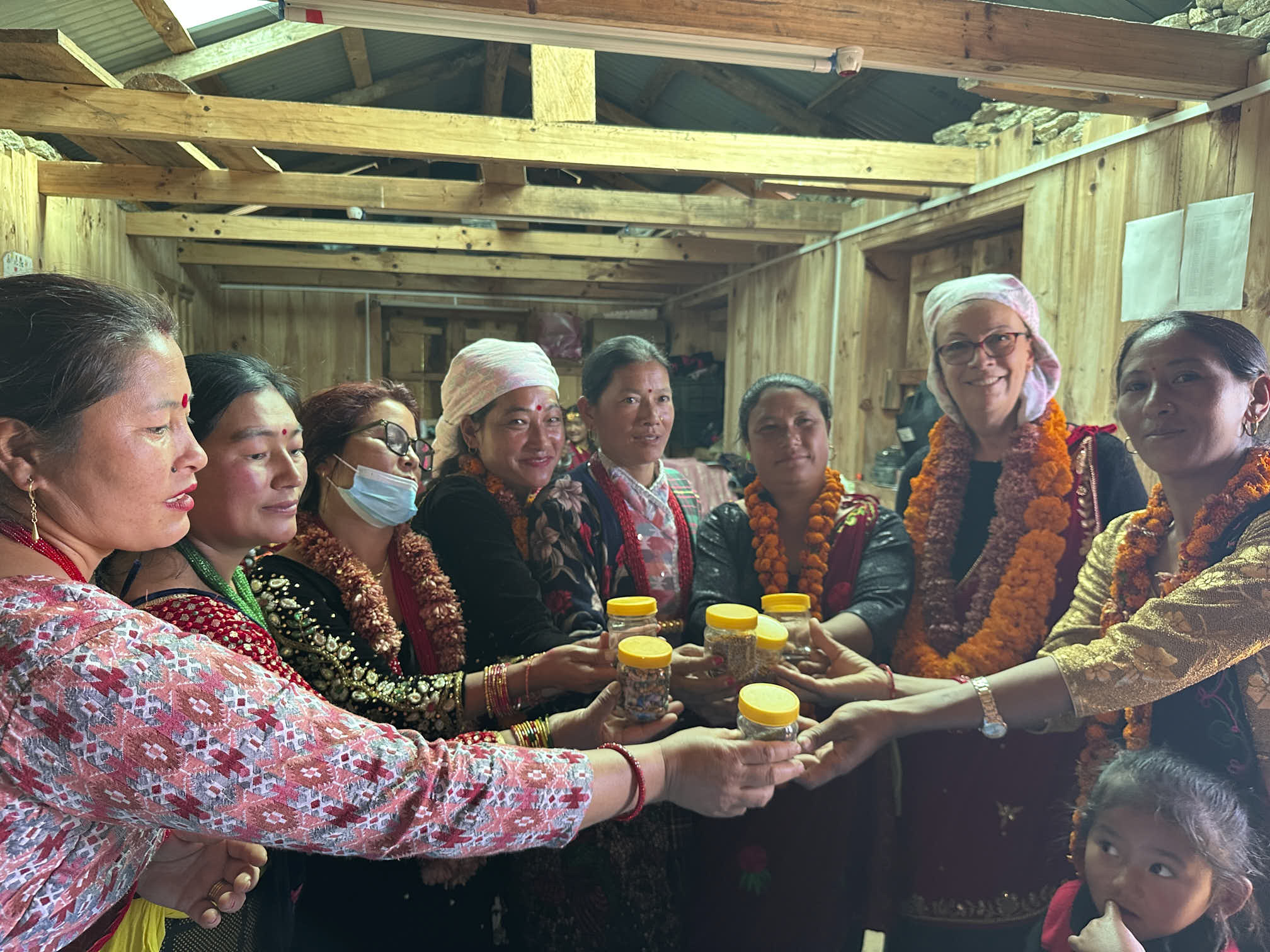
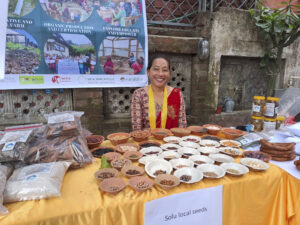
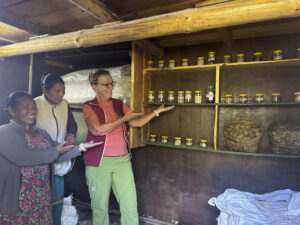
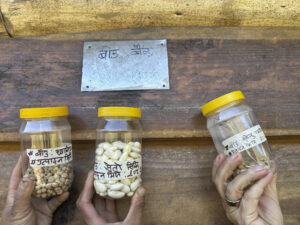
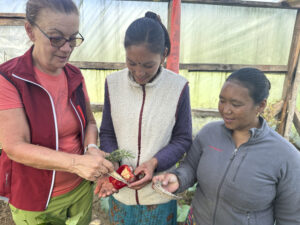
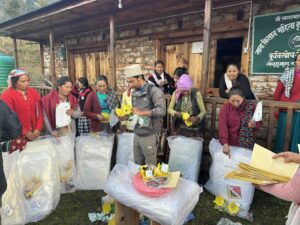
… agriculture can only be sustainable, if it uses its own seeds. We are delighted that the women are actively processing their own organic seeds and exchanging them amongst themselves.
Special varieties are also preserved on the model farms.
.. seeds are exchanged amongst members of the cooperatives.. the seeds are in demand even beyond the region.. Chyangsar is home to one of the main seed banks
.. special varieties are also stored at the model farm
.. plays a central role in the cooperative, primarily coordinating joint marketing activities. It is not always easy to motivate the women in the four villages to work together on their future.
In any case, we are very impressed by how much she has developed personally in recent years.
Many thanks to Fair Styria for supporting marketing in the villages.
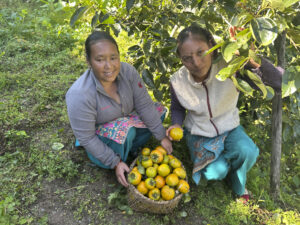
..at the model farm in Chyangsar. In addition to vegetables and seed production, more fruit can be harvested each year. Alongside apples and kiwis, this year there is a bountiful harvest of persimmons for the first time.
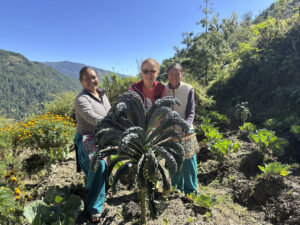
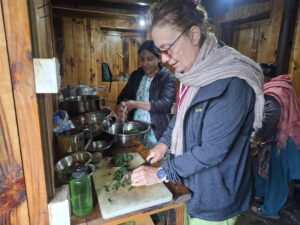
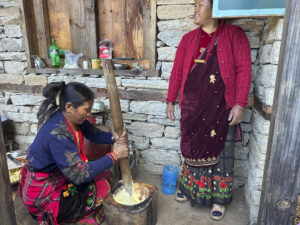
Palm kale was new to the women, so Carola organised a small cooking class and together they created Nepalese dishes.
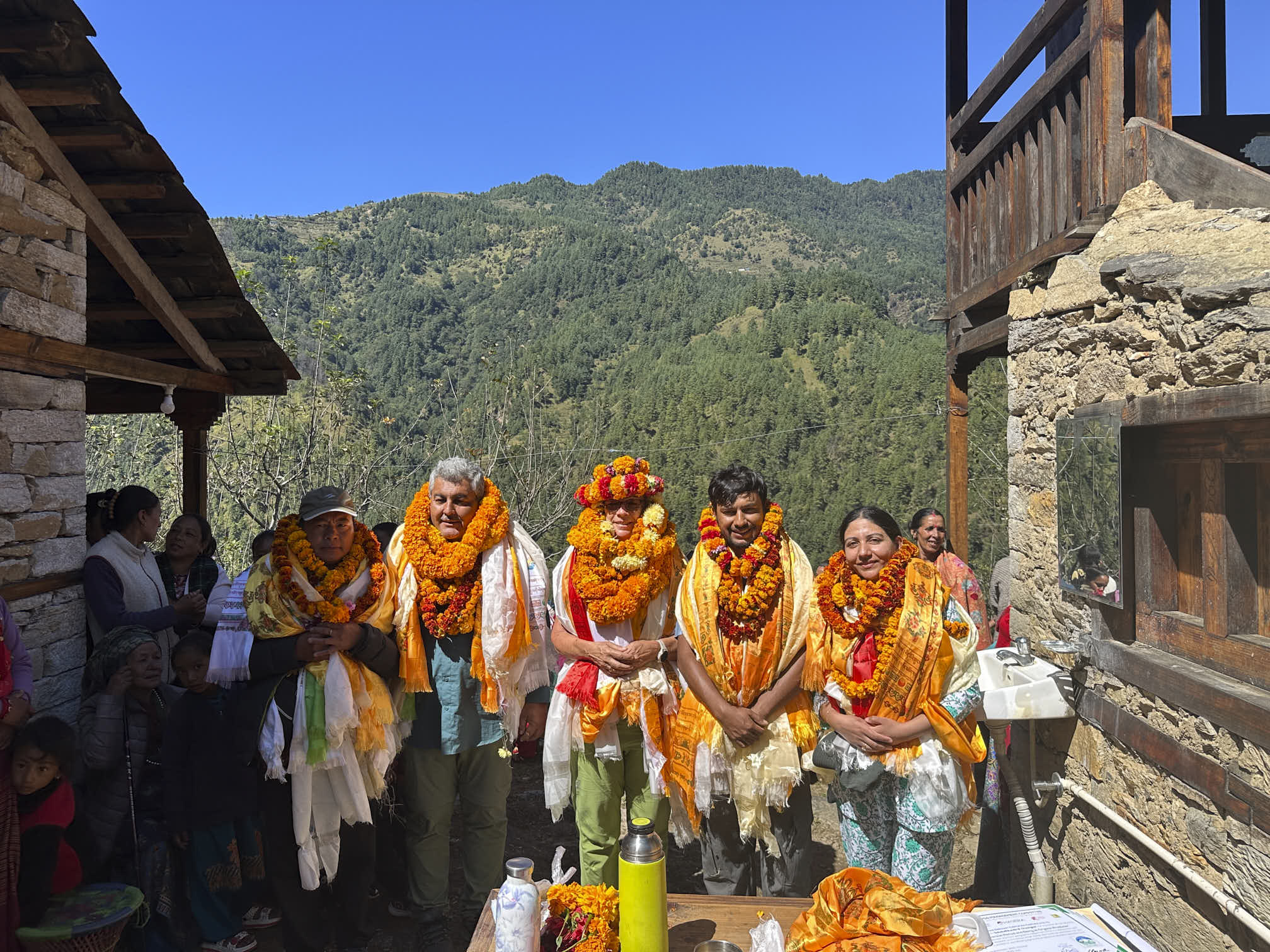
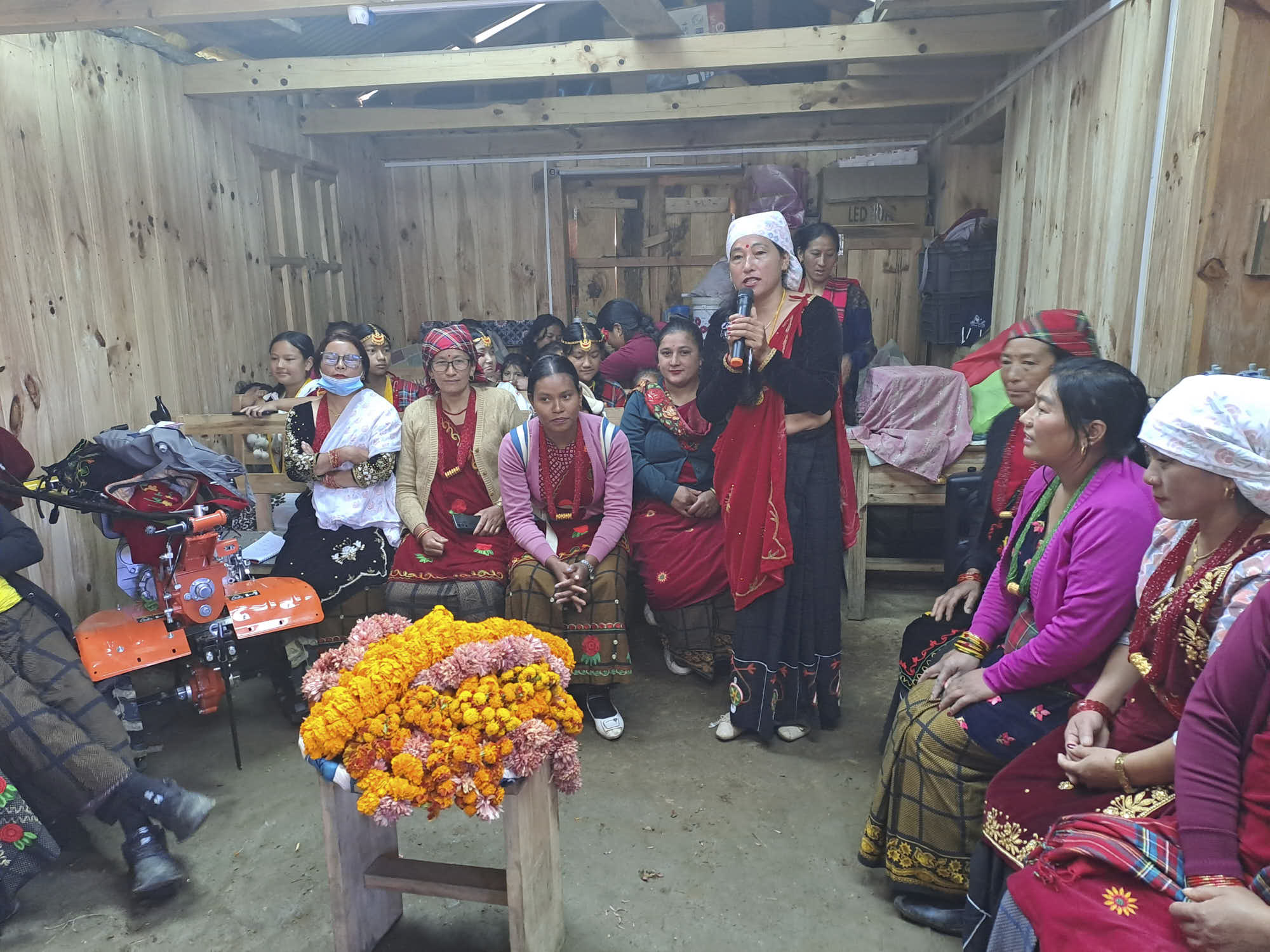
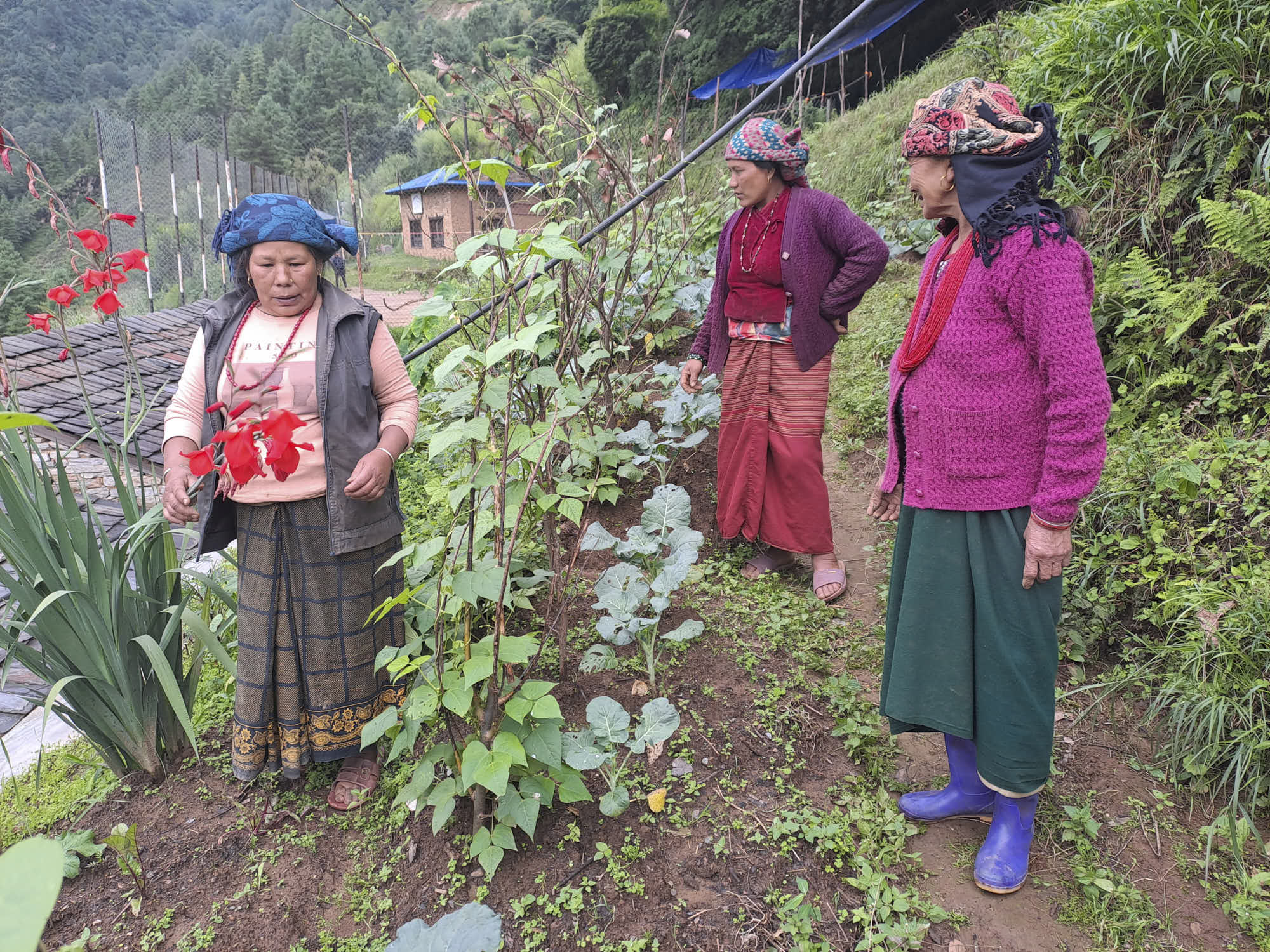
.. As always, there were lots of flowers to welcome us... Seed extraction is very important... The persimmons are new and everyone loves them... There is lots of palm kale, and it’s big, so we need recipes.
..we have been working together with the 33 women of the cooperative in Merangding on PGS (Participatory Guarantee System) certification for the cultivation of organic vegetables, Farmers Field Schools to deepen their knowledge, and income generation through sewing and vegetable sales. The model farm with a training hall was set up and marketing opportunities were explored together. Fruit trees grafted in Ghunsa are being cultivated on another field.
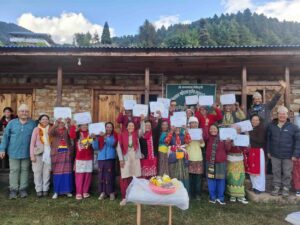
The first 18 women have even been recertified this time.
Now the women are equipped to continue growing vegetables and generating income independently. A reason to celebrate.
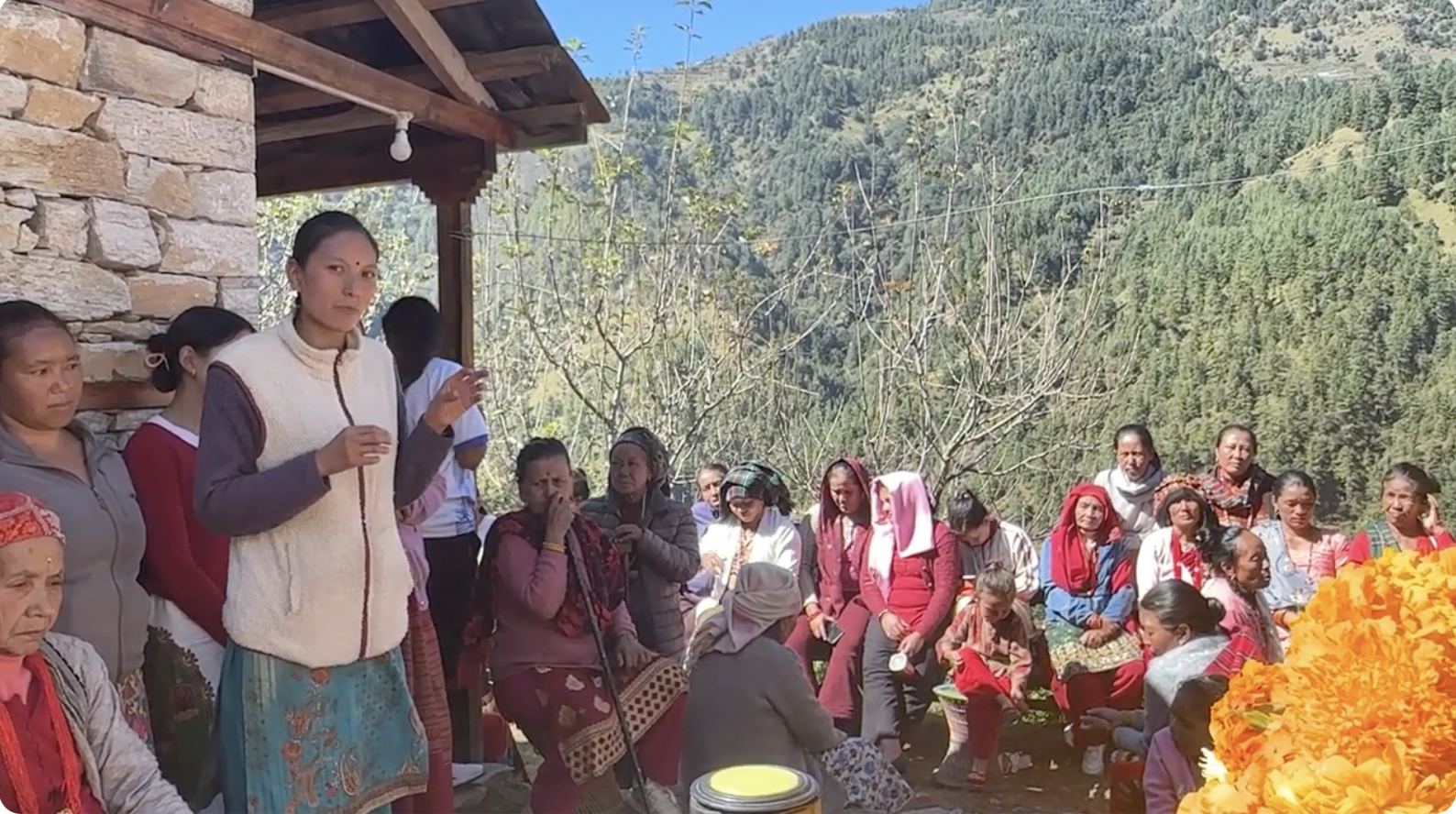
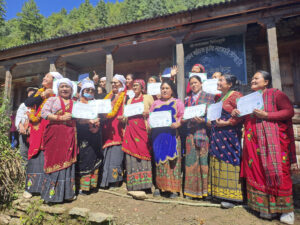
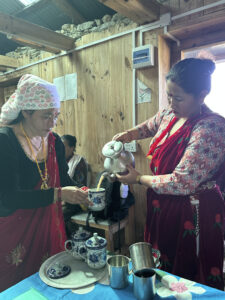
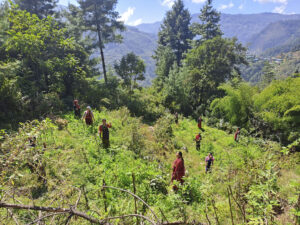
.. The women speak confidently about their successes... After being examined by the PGS committee, they received their new certificates... Drinking tea and chatting together is part of the experience... The meal includes delicious potato dumpling soup... The mixed crops in the field and greenhouse are exemplary... The women stand proudly next to their small fruit trees.
…we have been working together with the 65 women of the cooperative in Kunikhop (Jaidu, Jyanging, Surke) on PGS (Participatory Guarantee System) certification for the cultivation of organic vegetables, Farmers’ Field Schools to deepen their knowledge, and income generation through sewing and vegetable sales. The model farm with a training hall has been set up and marketing opportunities have been explored together. The first 17 women have even been recertified this time.
Now the women are equipped to continue growing vegetables and generating income independently. A reason to celebrate.
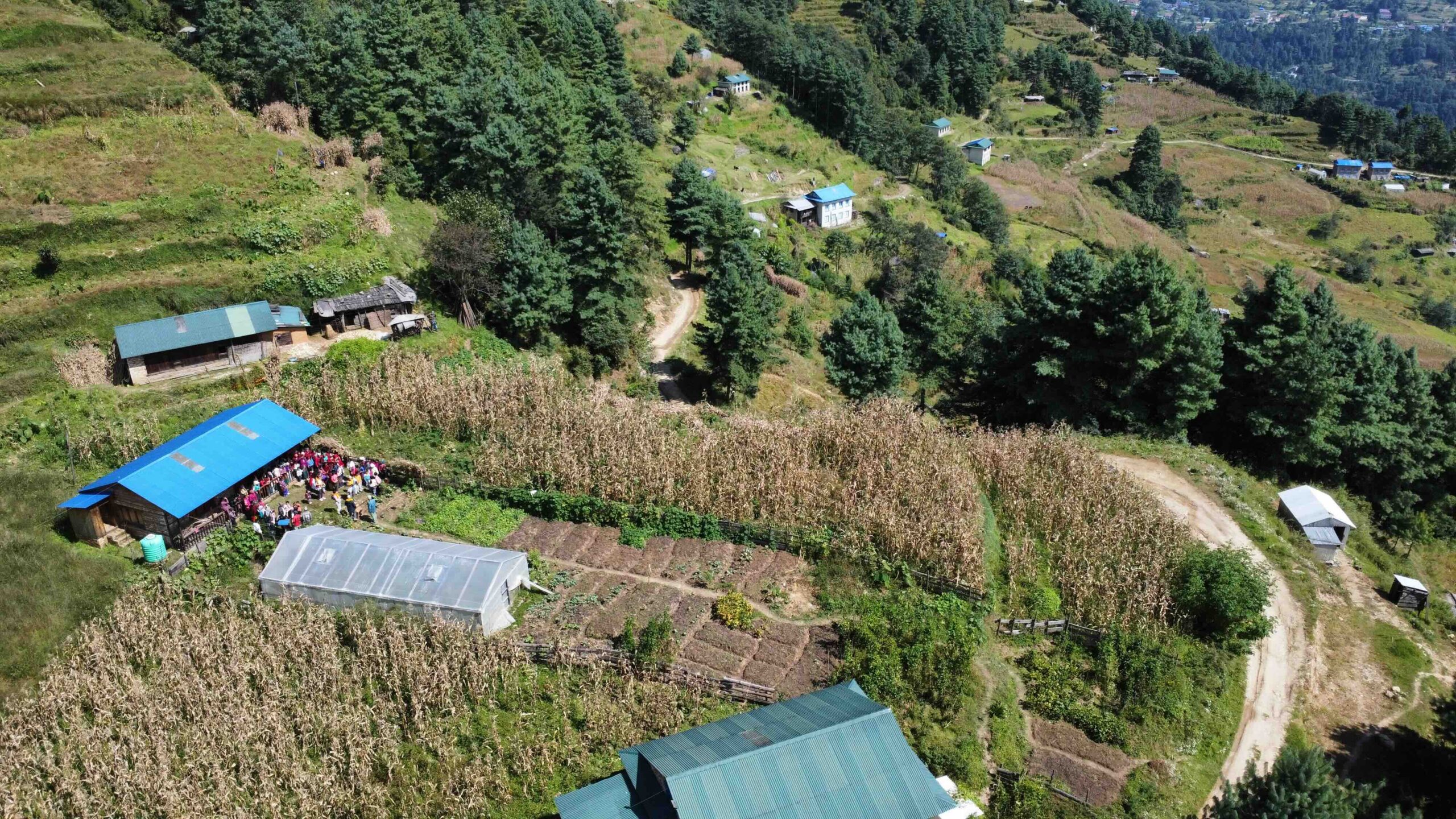
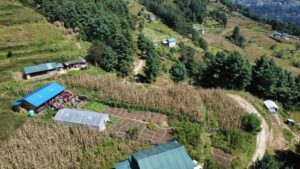
.. Nestled in the centre of the villages is the model farm, where all training takes place and seedlings are grown.
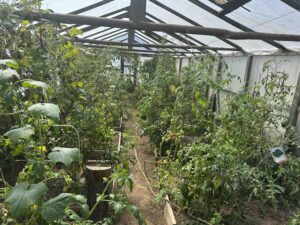
.. Sensitive vegetables are grown in the greenhouse... Including seedlings – currently for winter vegetables... Participants in the current special training course receive important material for maintaining the greenhouses and fields.
.. The recertification exam was also held as part of the training course.
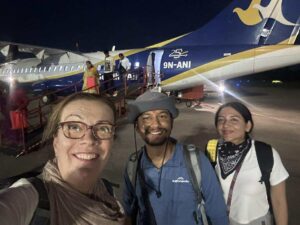
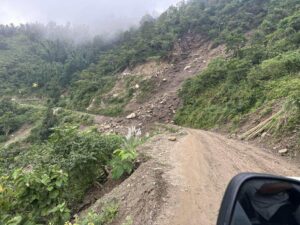
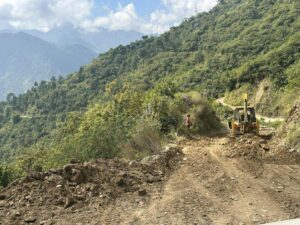
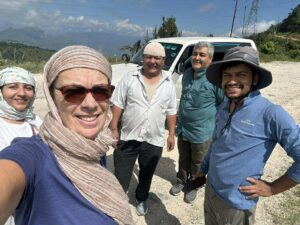
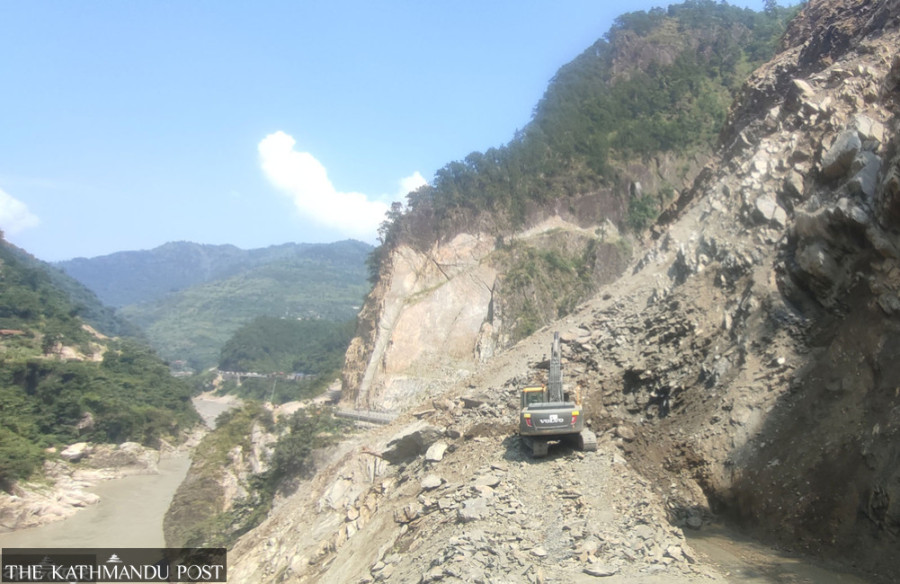
…towards Solukhumbu. Unfortunately, some of the roads were still impassable. Parts of the road were missing after last year’s floods, and the alternative route through the riverbed was impassable due to the current water level. So we flew to Janakpur and took a jeep to Solu from there.
Many thanks to my team, who always find a solution for everything.
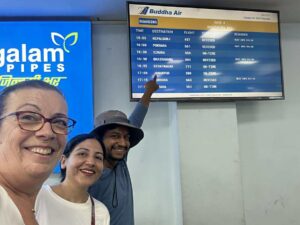
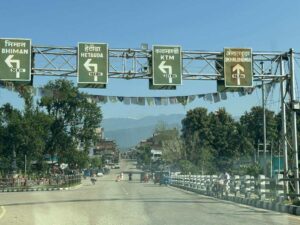
.. we really checked all the options ?.. finally took a plane to Janakpur.. arrived in the evening, delayed as is usual in this country.. after 3 hours in the jeep, we reached the big junction – straight on for 7 hours to cover 96 km, then only 3 more hours ?.. that was the old road to Solukhumbu, no longer in use.. still under construction in some places
when the monsoon in Nepal reliably ended in mid-September? Heavy rain, the rivers are rising again, the airport and public transport are repeatedly suspended. The subsequent sunshine triggers further landslides.
‘Our highway’ towards Solukhumbu was closed on 4 October 2025 until further notice due to landslides and flooding.
So once again, it is uncertain whether, when and how we will be able to drive to the villages.
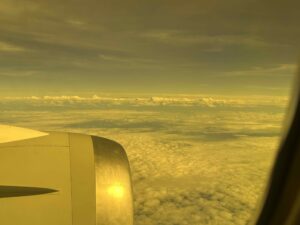
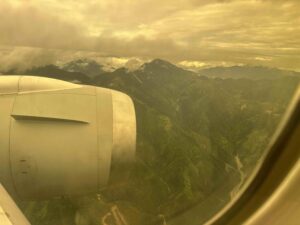
..I flew to Nepal for the first time and was impressed by the approach. Almost 20 years and what feels like a million aeroplane photos later, the approximately 30th approach is still impressive. Today, I associate it not only with scenic beauty but also with an inkling of the challenges this country faces.
I am looking forward to a good time with our Nepalese team. Thank you to all the sponsors who have made our work possible for 12 years now.
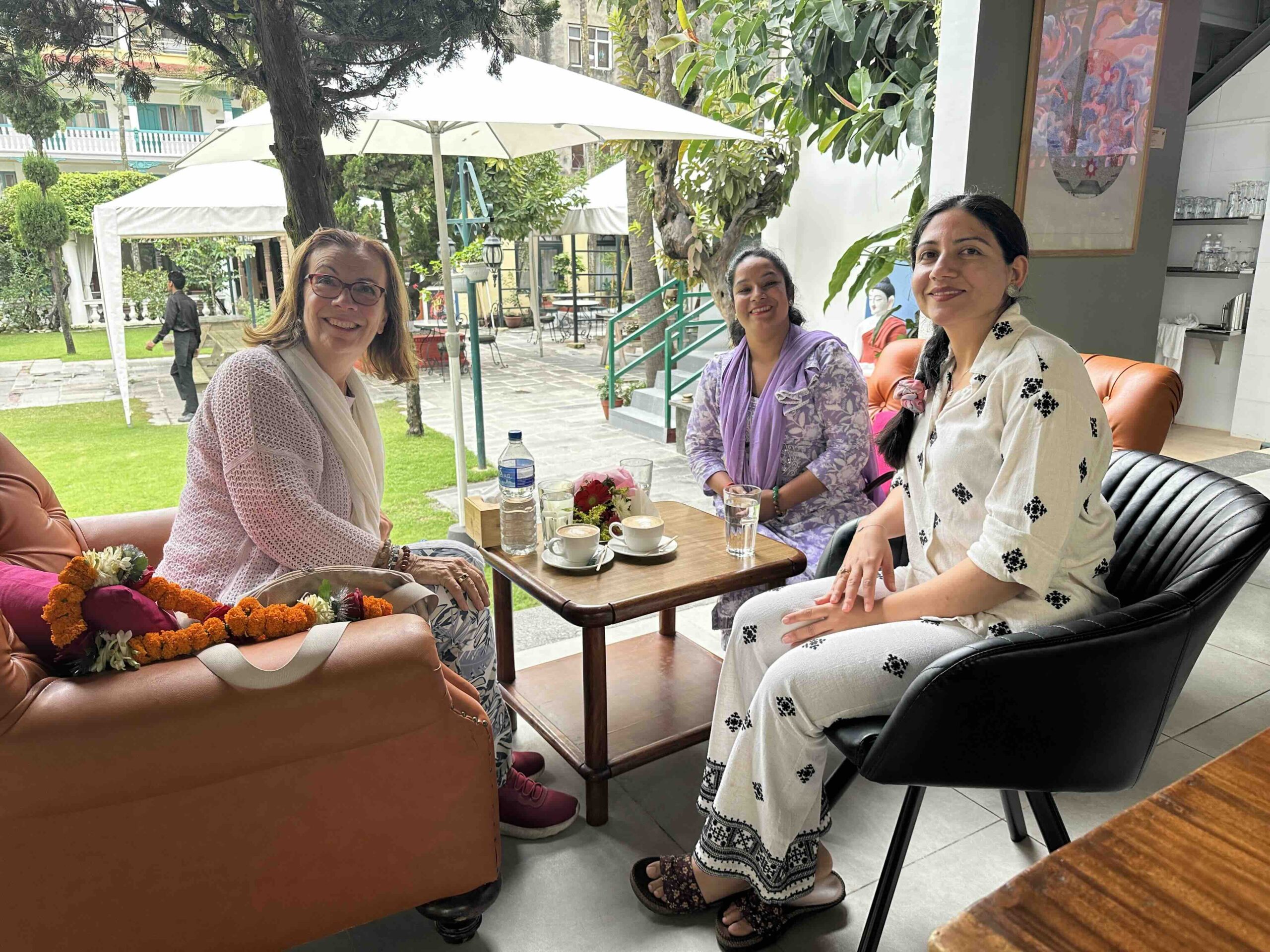
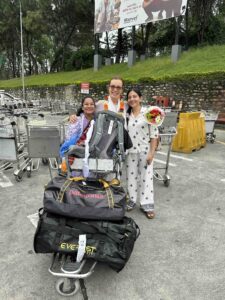
.. this time, Himalaya at dawn.. after the Indian lowlands come the low mountain ranges and the landing.. women power at reception in Kathmandu
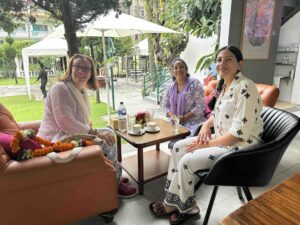
.. After 16 hours of travelling with only 2 hours of sleep, the cappuccino at the hotel tastes especially good ?
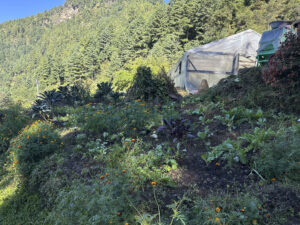
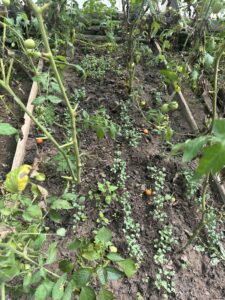
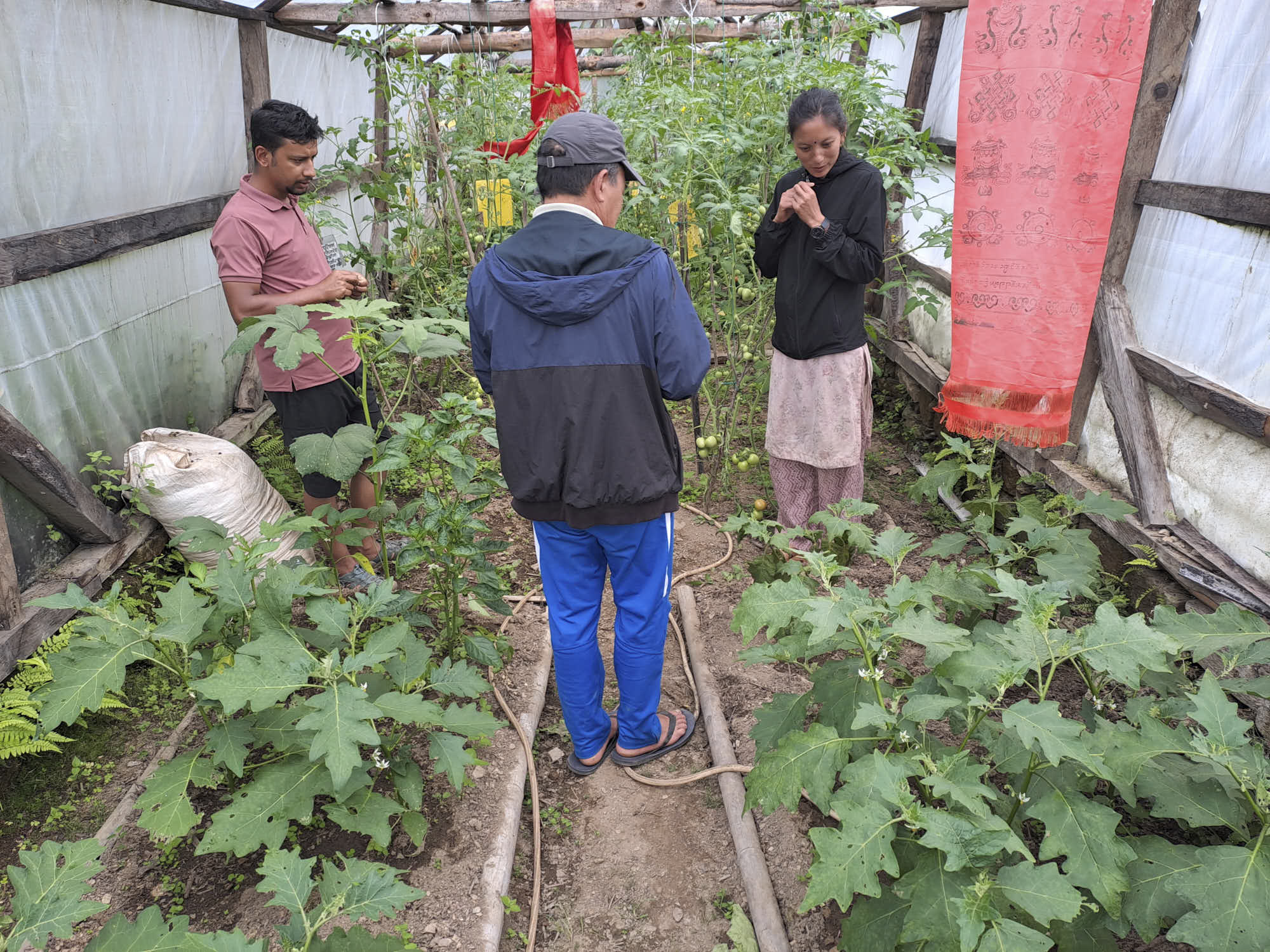
In mixed cultivation, the plants support each other. The young plants are in the field and everything is being prepared for the next sowing in the greenhouse.
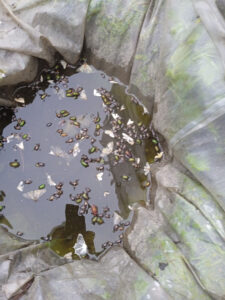
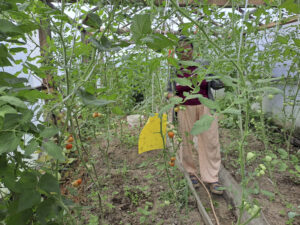
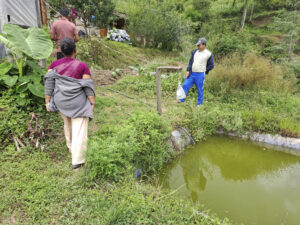
…and water management are essential components of sustainable agriculture in Chyangsar. Our experts have shown the women some ways to combat pests naturally. Light traps, yellow boards, and red flags help with this. Water from the kitchen is collected through filters in a small pond and used for watering.