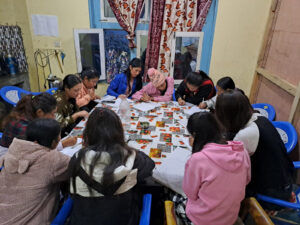
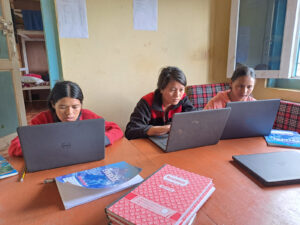
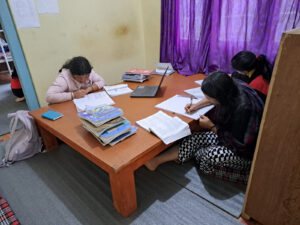
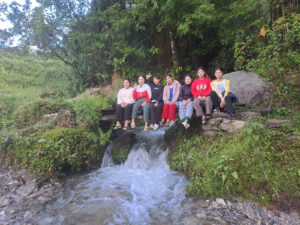
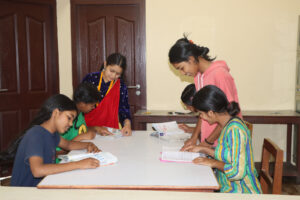
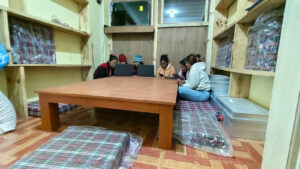
… is much more comfortable with the new insulation mat on the floor. They are also working more and more with computers, a skill they will need later on.
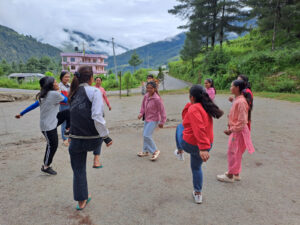
Physical exercises and short excursions are organised during the breaks. It is important that the girls are healthy in every respect.
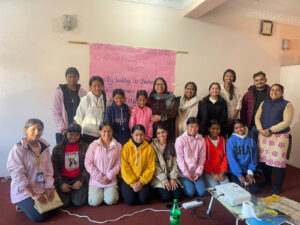
.. learning together.. they take turns working on the computers in the hostel.. the girls sit on the floor, so the insulating mat is very helpful.. they do gymnastics to loosen up.. Excursions are fun and add variety to learning
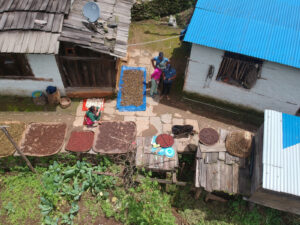
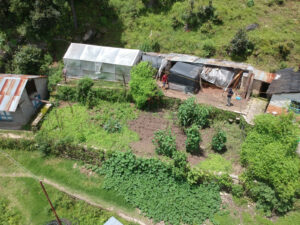
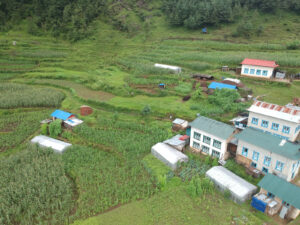
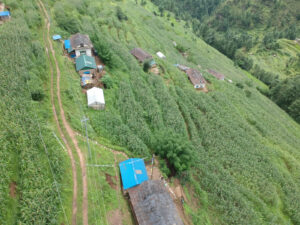
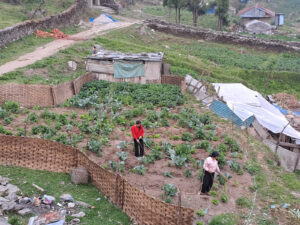
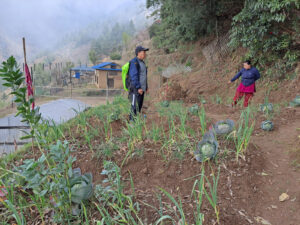
… of some farms from above. The houses in the individual villages are very different. This is mainly due to the location. Where there are roads, the houses can be built more elaborately. But even the large houses are unheated and often have open fires.
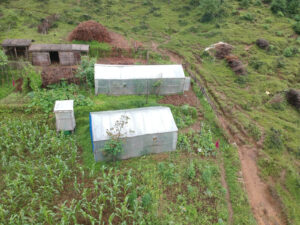
What everyone now has are greenhouses, which they can use to grow different types of vegetables.
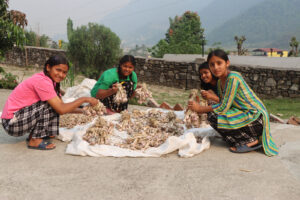
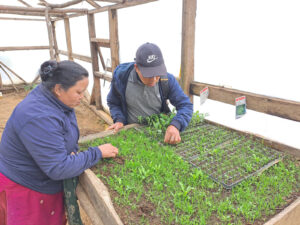
.. the women dry their harvest in the sun.. the greenhouse helps to grow vegetables.. there are also greenhouses in Ghunsa.. a lot of maize is still grown alongside the vegetables
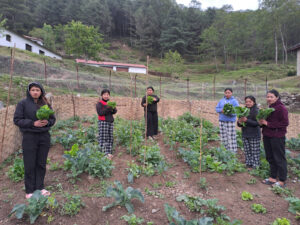
… at the hostel are very proud of their own vegetables. They have lovingly tended their own beds and produced their own organic compost and fertiliser.
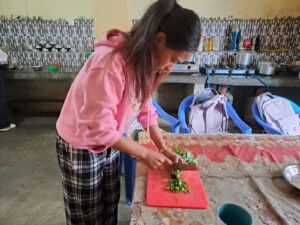
Cooking their own vegetables is a good basis for a healthy life.
We are proud of the girls’ independence and wish them continued success at school and in the garden.
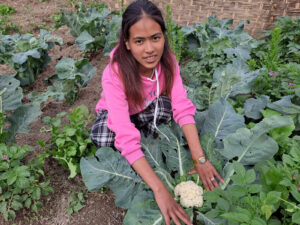
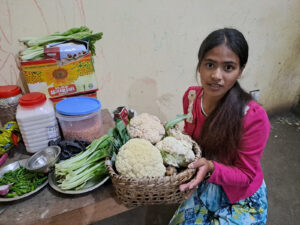
.. the girls proudly harvest spinach from their own fields.. cut into small pieces and steamed.. the cauliflower has also grown really well.. the beds are regularly tended and watered
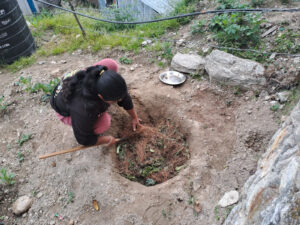
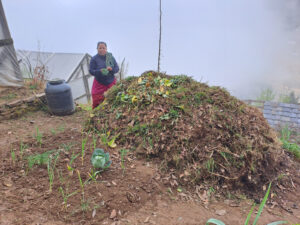
.. the leftovers are quickly composted in soil pits
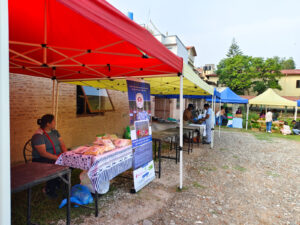
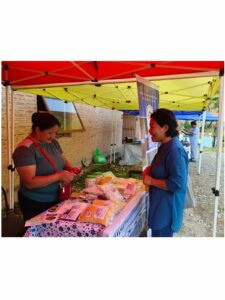
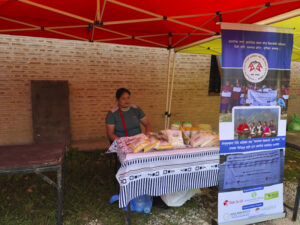
… is in great demand, especially at small markets. This is also a test run to see which products are accepted and how.
The aim is to find ‘fans’ for the organic products, who can also be supplied directly by the co-operative in future.
In future, products will also be sold via the website www.solusisters.org.
Many thanks to Fair Styria for supporting this important project.
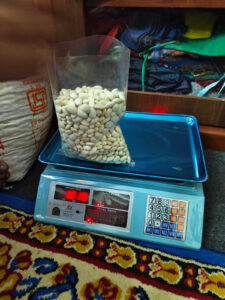
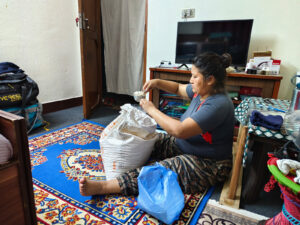
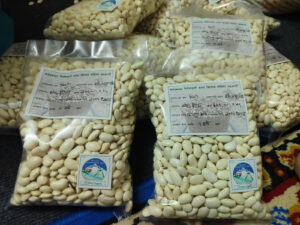
.. organic products are offered at small markets… the products have a story that buyers like to hear.. the beans are weighed.. the beans arrive in Kathmandu in sacks
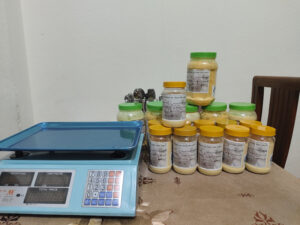
.. the organic certificate with the farmer’s number is attached to each package
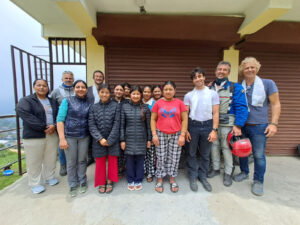
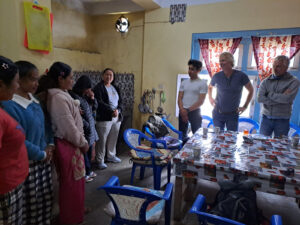
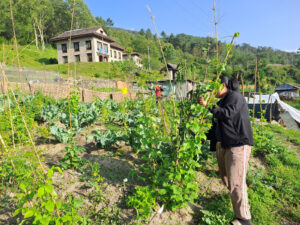
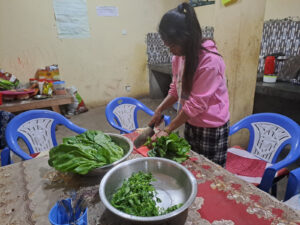
… the girls at the hostel received a surprise visit from Robin Schöck, Managing Director of the Schöck Family Foundation. This was of course very exciting, as they were allowed to proudly show off their house and garden immediately after their final exams. Of course they also harvested and cooked for the guests.
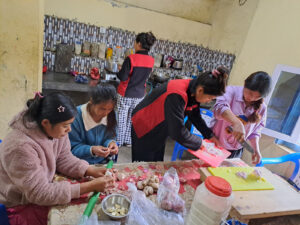
.. the girls with the guests in front of the house.. everyone is introduced in the kitchen.. fresh vegetables are harvested for the guests in the girls’ garden.. the girls have also learnt a lot about cooking.. they are proud of THEIR vegetables
.. the traditional momos are skilfully made by hand for everyone
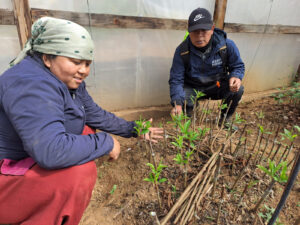
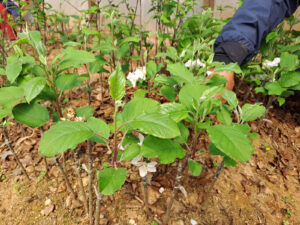
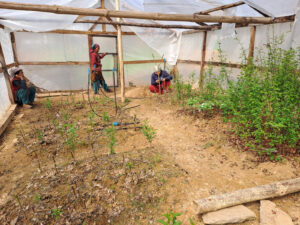
… we are all delighted with the success of the first tree nursery. As there had never been a tree nursery of this kind before, it was an experiment and also a risk. But the grafted trees are developing well and soon fruit will also be available on the family farms. This will enrich the children’s diet in particular.
In the future, these fruit trees can also be sold and thus generate income for the women of the co-operative.
We are delighted and would like to thank Schoeck Family Foundation for supporting this project.
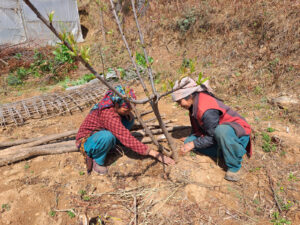
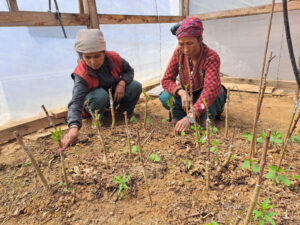
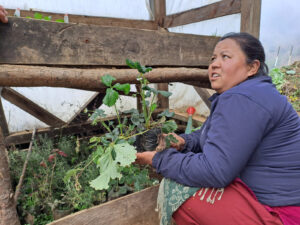
.. the larger trees and mother trees are cared for outdoors.. grafting takes place in the greenhouse, not all small trees work well.. the expert accompanies the cultivation.. even the small cuttings have their first flowers.. there is enough space for the fruit and nut trees in the greenhouse
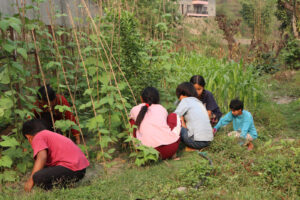
… is also important for our girls in Pokhara. They now look after the garden and the greenhouse very independently. They are happy about the harvest and everything is used in the kitchen.
They are also doing very well at school, which they can celebrate with a video evening.
Many thanks to our sponsors who make it possible to support these girls.
.. the garden is grown organically with mixed cultivation.. there can never be enough garlic ?.. they are always at the top of their class at school
in Ghunsa is exemplary run by the farm manager. The mixed crops are now cultivated largely independently, new seeds are constantly being trialled and plants grown.
An essential part of this is also the use of the compost toilets and thus the perfect compost.
.. the mixed crops are harvested and replanted again and again.. the seeds are grown and pricked out in the greenhouse.. always something new – now also strawberries
.. only organic fertiliser is used, compost must always be available
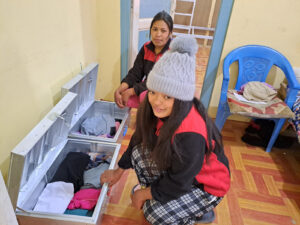
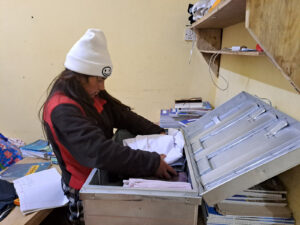
… of the girls at the hostel was a storage box where they could keep their personal belongings. Previously these were only in bags, there are no boxes in the hostel.
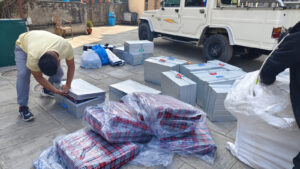
These were made in Kathmandu and brought to Sallerie together with seat cushions.
.. suitable boxes were produced and seat cushions purchased in Kathmandu.. the girls enthusiastically put their personal belongings away.. the boxes also protect against moisture
… the seat cushions make working on the converted bed frames cosy
… is the idea of processing pumpkins. Until now, some of them were eaten but most were fed to the animals. They grow everywhere, even on slopes that cannot be used for other vegetables. Now they are collected from all the villages and processed in Ghunsa.
Dried and possibly as flour, they can be used for soups, curries, but also bread and cakes. The market for these long-life products is to be developed, especially in the accommodation centres on trekking routes and in Kathmandu.
Many thanks to Fair Styria, which supports the marketing of the products.
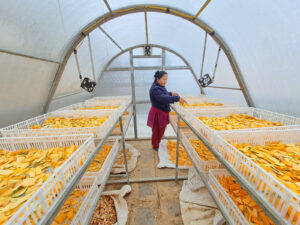
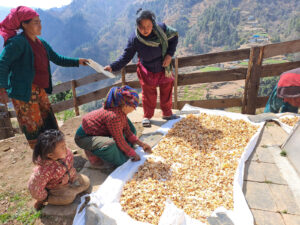
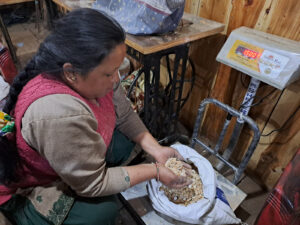
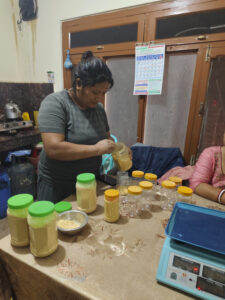
.. the cut pumpkins are dried in the solar dryer… where possible, the women also dry them outdoors.. in addition to the pumpkins, the seeds are also processed.. The flour is bottled.. the products are certified organic
.. direct sales have started at the market in Kahtmandu