Category: Chyangsar-EN

  • Building ..

    Building ..

    .. local capacities means passing on the women’s knowledge from village to village.

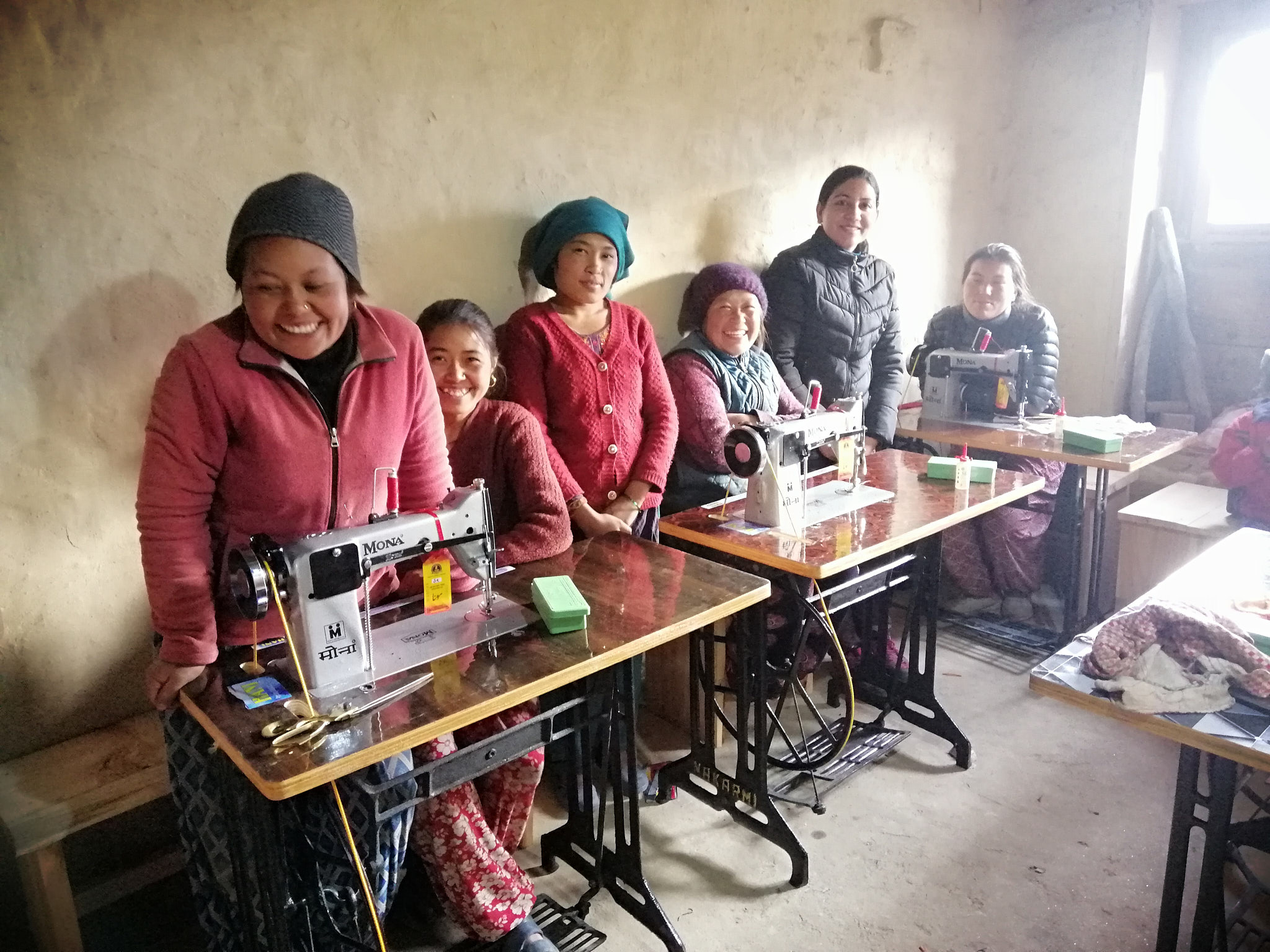
    Thus, our experts from Chyangsar have now also trained the women in Ghunsa and Meranding. Washable sanitary napkins are now being sewn everywhere in the sewing workshops and can be sold through the cooperative. Soon, the cooperative will have its own brand.

    We are happy about the great commitment of all and thank our sponsors for their support.

  • Better and better ..

    Better and better ..

    .. are the washable sanitary towels. The feedback from the women is discussed and the new models are adapted accordingly. The general process of how the individual sewing workshops work together is also explained and discussed by our social worker Racedi.

    For example, there is now a central warehouse for the material, which is collected by the women from the villages, and when the sanitary napkins are delivered, they receive the agreed wage per sanitary napkin directly from the cooperative. The sale will then also take place centrally through the cooperative. In this way, marketing can be done jointly and larger quantities can be delivered.

    We are proud of the skills that the women have built up in such a short time and thank our sponsors for their support.

  • Successful ..

    Successful ..

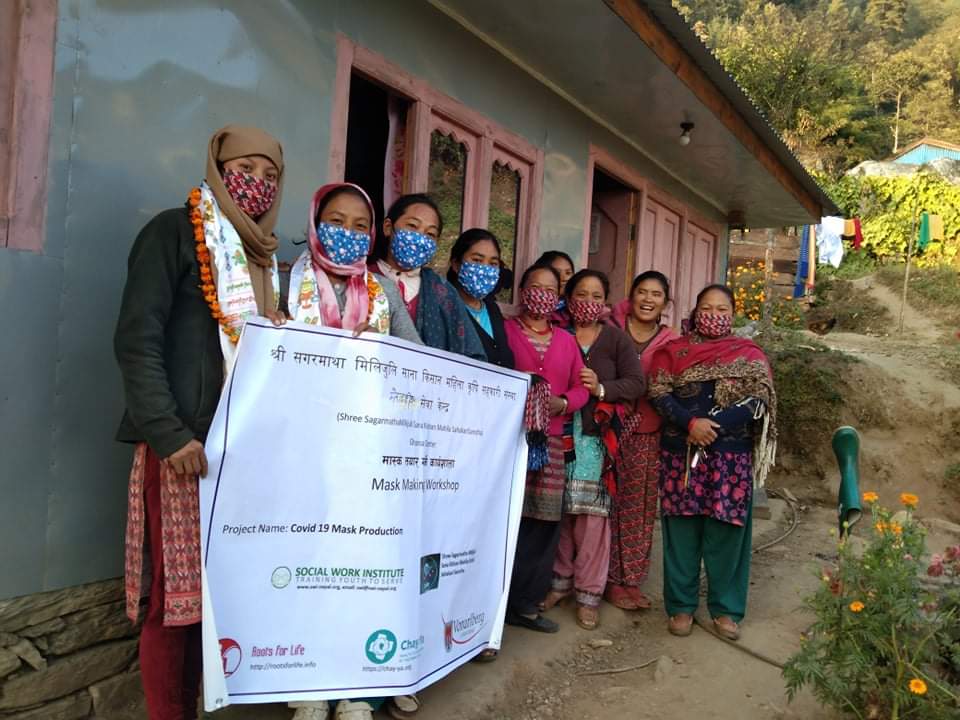
    .. was the quick effort of all sewing forces to distribute the first masks not only to the students but to all inhabitants in the villages of Chyangsar, Ghunsa, Meranding and Kunikhop.

    The sewing is going on diligently but already some things will be distributed before Christmas.

    We thank before all Chay-ya Austria and the province of Vorarlberg for making this project possible.

  • Chyangsar  – Scholarships

    Chyangsar – Scholarships

    The support began with a selection of girls who did not regularly attend school due to their family situation. At the request of the women and girls, however, it was then decided to extend the program to all children. In particular, the individual needs of the girls are addressed, but the boys are also integrated regarding material (except school uniforms) and group activities.

    • Material for school and in some cases hygiene articles are provided for all 31 children in Chyangsar, special things like school uniforms and underwear for 21 girls.
    • Food for all families was important, especially in Corona times, as the income of most of the men has been eliminated
    • Individual support for the girls has been taking place since 2015 through personal conversations with Carola Gosch and our local partner. By now, there is an intensive and trustful exchange regarding their needs and wishes.
      • In these talks, the situation during menstruation was also discussed with the girls. The lack of sanitary facilities in the schools and the lack of hygiene articles make it difficult for them to attend school at these times. Among other things, this gave rise to the initiative of sewing workshops for washable pads.
    • Group activities such as the use of a common library with “non-school books” as well as learning support and English conversation courses were actively demanded by the president of the “KidsClub”.

  • Chyangsar – Income

    Chyangsar – Income

    For the women in Chyangsar, we have supported two ways to generate income. On the one hand, income from vegetable cultivation, and on the other, from a sewing workshop established in 2020.

    Plants and vegetables:

    • the model farm sold about 1,200 vegetable plants and about 2,600 kg of vegetables in 2020, with the money benefiting the cooperative’s programs
    • the women were also able to use their knowledge directly to grow vegetables in their gardens and successfully sell them at local markets

    Sewing workshop:

    • the sewing workshop was built in 2019 and seven women were professionally trained by our project partner Hasera near Kathmandu
    • with this it was already possible to produce saleable washable sanitary napkins
    • Already in 2020, the first sanitary pads could be sold through the cooperative to the government and also in the village.
    • Within the framework of a Covid program, about 5,000 masks could also be sewn together with the other sewing workshops and distributed to the villagers.
    • The women pass on their experience in the form of training to women in the other villages


  • Chyangsar – Farming

    Chyangsar – Farming

    In Chyangsar, organic vegetable cultivation has been supported by RfL since 2016. In the beginning, there were still many reservations here; instead of training, many would probably have preferred to receive fertilizer. In the meantime, however, acceptance is high and the results are visible.

    Model farm:

    • In 2017/18, a farmhouse with kitchen, storage, guest rooms for trainers as well as toilet facilities and a training hall were built
    • Seeds are cultivated in three large greenhouses, young plants are grown and special vegetables such as tomatoes and chili are cultivated.
    • Organic mixed crops are cultivated on several terraced fields (approx. 10,000 m2). As a first step into fruit growing, 200 apple trees (Gala, Granny, Golden Delicious) were planted.

    Certification program:

    • 35 women have qualified for the program, thus 216 people in those families will have their own supplies improved.
    • 58,000 m2 are cultivated organically through the program, previously the land was partially unused.


  • Chyangsar

    Chyangsar

    Chyangsar is a village in Solududhkunda at an altitude of 2380m with 188 mostly Hindu families. Here Roots for Life started to work with the women after the earthquake in 2015.

    A structure in the way of a (self-)organization hardly existed before, just as little as a place where more than 10 people could gather under one roof and exchange ideas. Agriculture was practiced exclusively for subsistence with only a few vegetables.

    In the meantime, the center of the Sagarmatha Milijuli Sana Kishan Cooperative is located here, which spans several neighboring villages. The model farm built here serves as an example for the other villages.

  • Chyangsar – Cooperative

    Chyangsar – Cooperative

    The women from Chyangsar have gradually created the stable and legally anchored Sagarmatha Milijuli Sana Kishan Cooperative from an originally small informal group of women (five women in 2015). In addition to the local organization, an overseeing board was also formed jointly with Ghunsa, Meranding and Kunikhop.

    In the local subgroup, two women were hired to run the model farm. All others work on a voluntary basis.

  • Shortly before Christmas ..

    Shortly before Christmas ..

    .. the last mask workshop went into operation in Kunikhop. The good cohesion in the cooperative made it possible to extend the activities to this village as well. The women are trained by women from Chyangsar and Ghunsa. What was unimaginable a few years ago now works like clockwork. Knowledge transfer and information exchange among the women, use of synergies across village and project boundaries.

    We are very proud of the learning process of the women, who for a long time were used to fighting only for themselves.

    Many thanks to the state of Vorarlberg and to Chay-ya Austria for their support.

  • Masks ..

    Masks ..

    .. are now also sewn in Meranding. Also here the women from Chyangsar have done the training and generated income with their knowledge. Now the sewing workshops in Chyangsar, Ghunsa and also Meranding are active to sew masks for their inhabitants and the children in the schools.
    In total, about 5,000 masks will be sewn and distributed.

    We thank Chay-ya Austria and the government of Vorarlberg for making this project possible.